Wasp & Stinging Insect Control in Bedford, PA
Bedford is historic borough with older homes and a busy downtown corridor. Properties throughout Bedford — residential homes, commercial buildings, and rural structures alike — deal with stinging insect nests each year. Yellow jackets, bald-faced hornets, and paper wasps are the species most commonly requiring professional attention.
This page connects Bedford property owners with local pest control professionals serving Bedford County. We are not a pest control company — we help you find the right local professional to handle your specific stinging insect situation.
Stinging Insects in Bedford County
Yellow Jackets
Yellow jackets are the most commonly reported stinging insect problem in the Bedford area. They nest in ground cavities, wall voids, under decks, and in other structural voids — often going undetected until the colony is well-established. Yellow jacket colonies grow through the summer, reaching peak size and aggression in August and September. A colony disturbed near the end of summer — when workers are protecting a large nest with developing queens — can deliver a significant number of stings very quickly. Yellow jacket nests in wall voids are particularly problematic because they can create secondary issues if the workers chew through interior drywall.
Bald-Faced Hornets
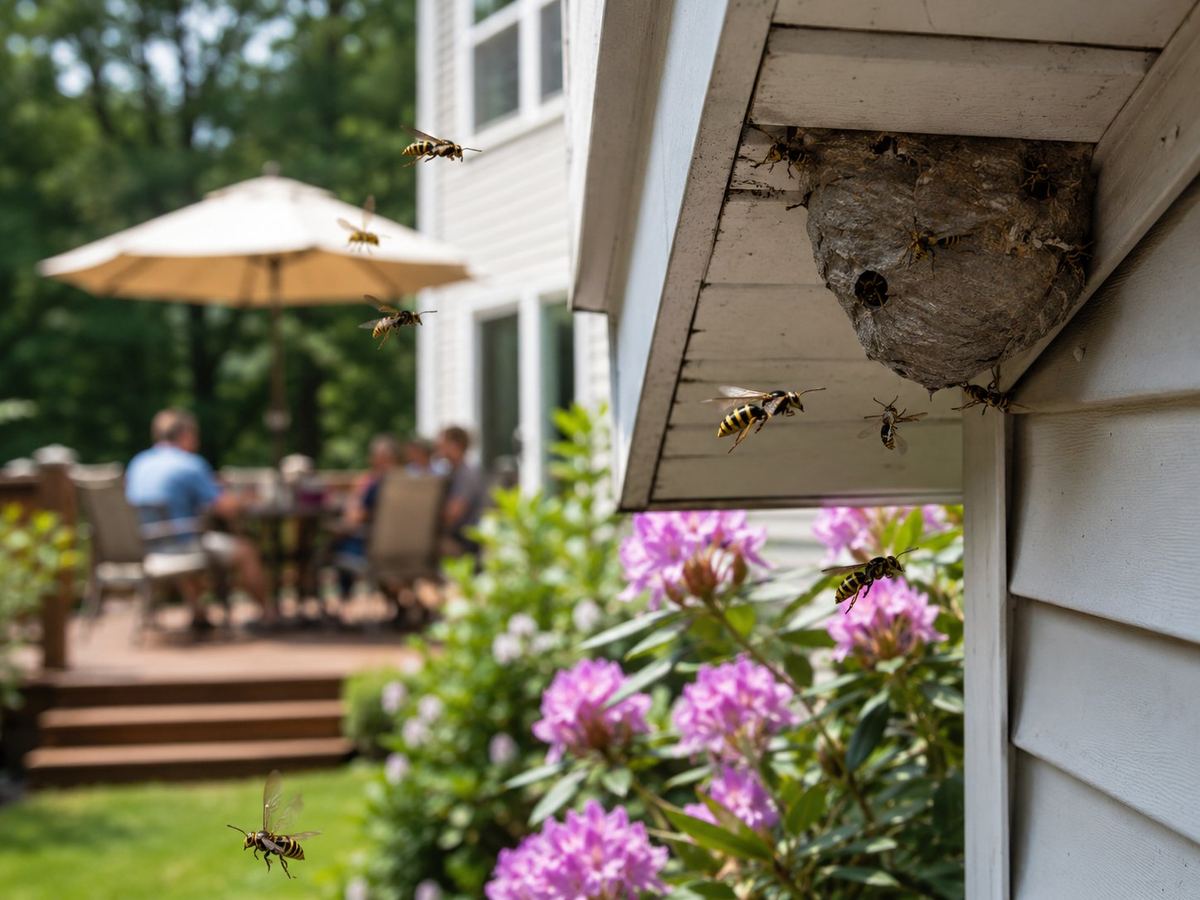
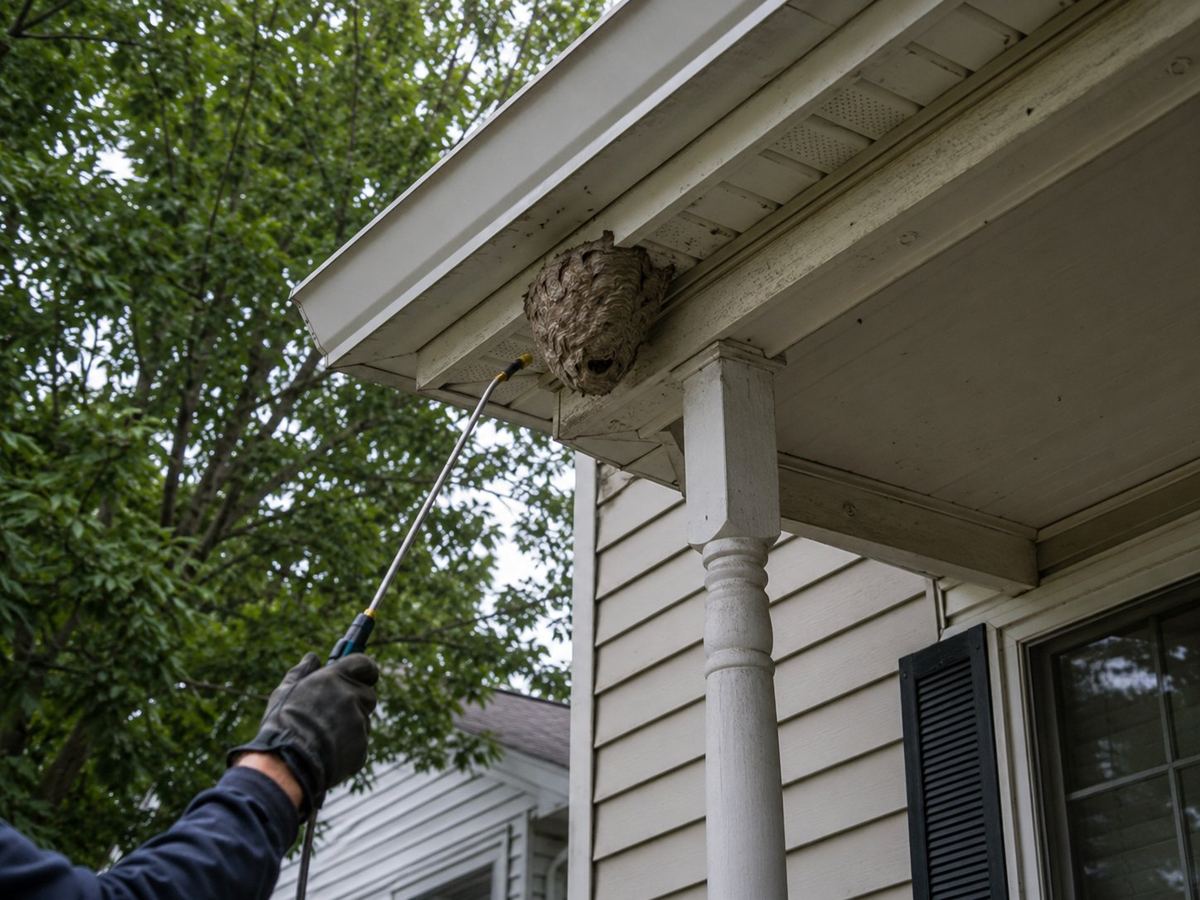
Bald-faced hornets build the large, gray, football-shaped paper nests commonly seen in trees, shrubs, and on building exteriors across the region. These nests can reach the size of a basketball or larger by late summer. Bald-faced hornets are protective of their nests and will pursue perceived threats — making nests near entryways, play areas, or high-traffic outdoor spaces a genuine safety concern. Nest removal before late summer is generally less risky than waiting until colonies are at full size.
Paper Wasps
Paper wasps build the small open-comb nests found under eaves, in door frames, behind shutters, and in other sheltered exterior spots. They are less aggressive than yellow jackets and bald-faced hornets but will sting if handled or if the nest is disturbed. Multiple nests near entryways are a common issue in spring and early summer.

A Note on Honeybees
Honeybees are not in the same category as yellow jackets, hornets, and wasps when it comes to pest control. Honeybees are protected pollinators, and most licensed pest control professionals do not exterminate honeybee colonies. If you're seeing honeybees — small, fuzzy, golden-brown bees often seen around flowers or in swarms — the appropriate resource is a local beekeeper rather than a pest exterminator. Your local county agricultural extension office can often provide referrals to beekeepers who handle removal and relocation. This resource specifically connects you with pest control professionals for yellow jackets, hornets, and wasps.
Frequently Asked Questions — Stinging Insects in Bedford
The most frequently encountered stinging insects in Bedford County are yellow jackets, bald-faced hornets, paper wasps, and European hornets. Yellow jackets are the most problematic for most homeowners — they nest in wall voids, underground, and in structures like decks and sheds, and they become aggressive in late summer when colonies are at maximum size. Bald-faced hornets build the large gray paper nests visible in trees and on buildings. Paper wasps build smaller open-comb nests under eaves, in door frames, and in other sheltered spots.
Stinging insect colonies in Bedford County are founded by overwintering queens in spring — typically April and May. Colonies grow through the summer, reaching peak size in August and September. This is when stinging insects are most numerous and most defensive, making late summer the most common time for sting incidents and nest encounters. After the first hard frost, colonies die off and do not reuse old nests the following year — though new colonies may establish in the same locations.
Nest removal carries real risk, particularly for yellow jackets and bald-faced hornets, which are aggressive defenders of their nests. Yellow jacket colonies in wall voids or underground can contain thousands of workers and will sting repeatedly when disturbed. Bald-faced hornets are known to pursue perceived threats away from their nest. For nests in accessible outdoor locations that are small and early-season, some homeowners manage removal without incident. For large nests, nests in structures, underground nests, or any situation near people who may have allergies to stings — connecting with a professional is the safer approach.
This is an important distinction. Honeybees are not the same as wasps or yellow jackets, and most licensed pest control professionals do not remove honeybee colonies because honeybees are protected pollinators. Honeybee swarms and established hive removals are typically handled by licensed beekeepers rather than exterminators. If you're dealing with honeybees specifically, your local county extension office can often provide referrals to local beekeepers who handle removals. This resource focuses on connecting you with pest control professionals for wasps, hornets, and yellow jackets.